

Last updated: February 10, 2026
Setting up a freshwater aquarium is one of the most rewarding hobbies you can pursue. Whether you live in Prague, Brno, or a smaller town in the Czech Republic, the process remains the same: careful planning, patience during the cycling phase, and a commitment to regular maintenance. This guide walks you through every step.
Choosing the Right Tank
The first and perhaps most important decision is selecting your aquarium. A common misconception among beginners is that smaller tanks are easier to maintain. In reality, larger volumes of water are more forgiving of mistakes because chemical changes happen more slowly.
For beginners, a tank between 60 and 120 liters is ideal. This size offers enough water volume to maintain stable parameters while remaining manageable in terms of cost and space. Glass tanks are generally preferred over acrylic ones in the Czech market due to their scratch resistance and clarity, though acrylic is lighter and better for very large setups.
Position your tank away from direct sunlight and heat sources. A sturdy, level surface is essential, as water is heavy (roughly one kilogram per liter). Many Czech pet shops such as those in OC Letnany or Hornbach carry quality starter kits that include the tank, lid, and lighting.
Essential Equipment
Beyond the tank itself, you will need several pieces of equipment to create a healthy environment:
- Filter: The heart of your aquarium. A hang-on-back (HOB) or canister filter rated for your tank volume is essential. Filters provide mechanical, biological, and chemical filtration to keep water clean and safe.
- Heater: Most tropical fish need water temperatures between 24 and 28 degrees Celsius. A quality submersible heater with a built-in thermostat ensures consistency.
- Lighting: LED lights are the standard for modern aquariums. They are energy-efficient, produce less heat, and many offer adjustable color spectrums ideal for plant growth.
- Thermometer: A simple digital or stick-on thermometer helps you monitor water temperature daily.
- Substrate: Fine gravel or specialized aquarium soil works well. If you plan to keep live plants, consider a nutrient-rich substrate like ADA Amazonia or Tropica Aquarium Soil.
- Water conditioner: Czech tap water contains chlorine and chloramines. A dechlorinator like Seachem Prime or API Tap Water Conditioner is necessary for every water change.
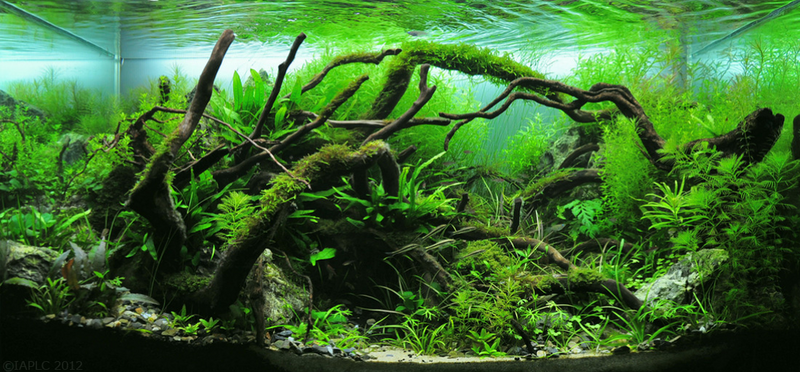
A nature-style aquascape. Careful planning of hardscape and plant placement creates a balanced, natural look.
The Nitrogen Cycle: Why Patience Matters
The nitrogen cycle is the single most important concept in fishkeeping. When fish produce waste, it breaks down into ammonia, which is toxic even in small amounts. Beneficial bacteria in your filter convert ammonia to nitrite (also toxic) and then to nitrate (much less harmful). This process takes 4 to 6 weeks to fully establish.
To cycle your tank without fish (fishless cycling), add a source of ammonia, such as pure household ammonia or fish food that decomposes. Test your water daily using a liquid test kit (API Master Test Kit is highly recommended). Once ammonia and nitrite readings both drop to zero and nitrate begins to rise, your cycle is complete.
Many fish deaths in new aquariums are caused by "New Tank Syndrome" - adding fish before the nitrogen cycle has fully established. Patience during this phase will save you heartache later.
Adding Your First Fish
After cycling, introduce fish gradually. Add only a few at a time to avoid overwhelming the biological filtration. Hardy species like guppies, cherry barbs, or corydoras catfish are excellent first choices. See our popular fish species guide for more recommendations.
When you bring fish home from a Czech pet shop, float the sealed bag in your aquarium for 15 to 20 minutes to equalize temperature. Then, gradually add small amounts of aquarium water to the bag over another 15 minutes before releasing the fish. This process reduces shock from differences in water chemistry.
Ongoing Maintenance
A healthy aquarium requires consistent care:
- Perform 20-30% water changes weekly using dechlorinated water
- Clean or rinse filter media monthly in old tank water (never in tap water, as chlorine kills beneficial bacteria)
- Test water parameters weekly during the first three months, then biweekly
- Feed fish small amounts twice daily, removing any uneaten food after a few minutes
- Trim and maintain live plants as needed
- Check equipment (heater, filter, lights) regularly for proper function
Common Mistakes to Avoid
Beginners often make the same mistakes. Awareness of these pitfalls can prevent frustration:
- Overstocking: Too many fish in a small tank leads to poor water quality and stressed, unhealthy fish
- Overfeeding: Uneaten food decays and produces ammonia. Feed only what your fish can consume in two minutes
- Skipping water changes: Regular partial water changes are essential even if the water looks clear
- Ignoring compatibility: Not all fish species get along. Research tank mate compatibility before purchasing
- Using soap or detergent: Never clean aquarium equipment with household cleaners. Even trace amounts are toxic to fish